Why You Freeze Under Pressure (And How to Stay Focused When It Matters Most)

You know exactly what to do… until it matters.
You’ve prepared, you’re capable, and you’ve done it before. But when the pressure hits, everything tightens. Your mind races, your focus slips, or you freeze completely.
If that sounds familiar, you’re not alone. This is one of the most common challenges we see in high-functioning adults.
And here’s the important part:
this isn’t a lack of ability.
Why Do I Freeze Under Pressure? (And How to Break the Cycle)
When people search for answers, they often assume something is wrong with them.
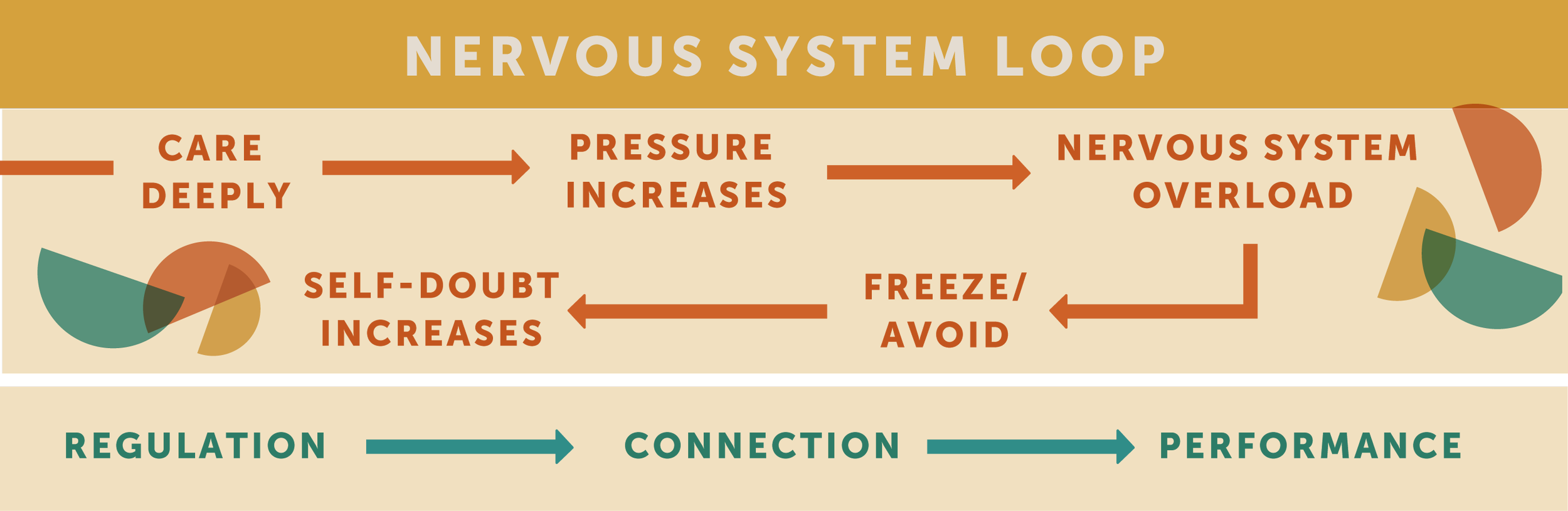
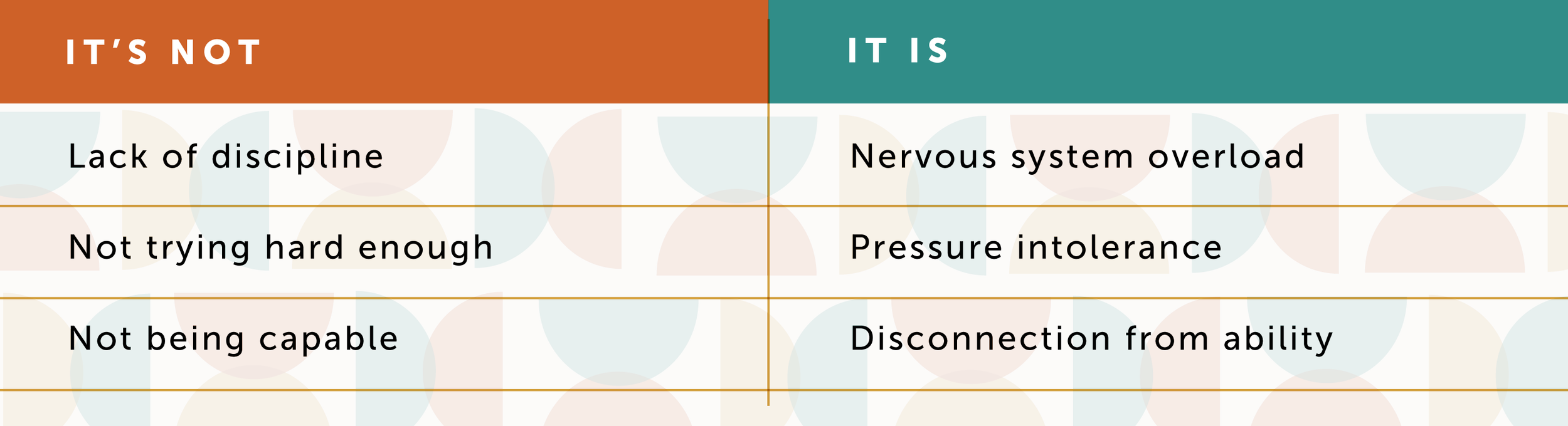
But freezing under pressure isn’t a sign that you’re incapable. It’s a sign that your nervous system is overwhelmed.
The more you care about something — your career, your performance, your relationships — the more pressure your system can feel to get it right. This can show up as overthinking, inconsistency, or feeling stuck when it matters most. For some, it looks like obsession, hyperfocus fatigue, or avoidance, swinging between over-engagement and complete shutdown. These patterns can overlap with things like ADHD, OCD, or nervous system dysregulation — but they’re often misunderstood when it comes to performance. This is where tools like breathwork, mindfulness, or body-based awareness can help regulate your system in the moment — creating space to respond instead of shut down.
That pressure can show up as:
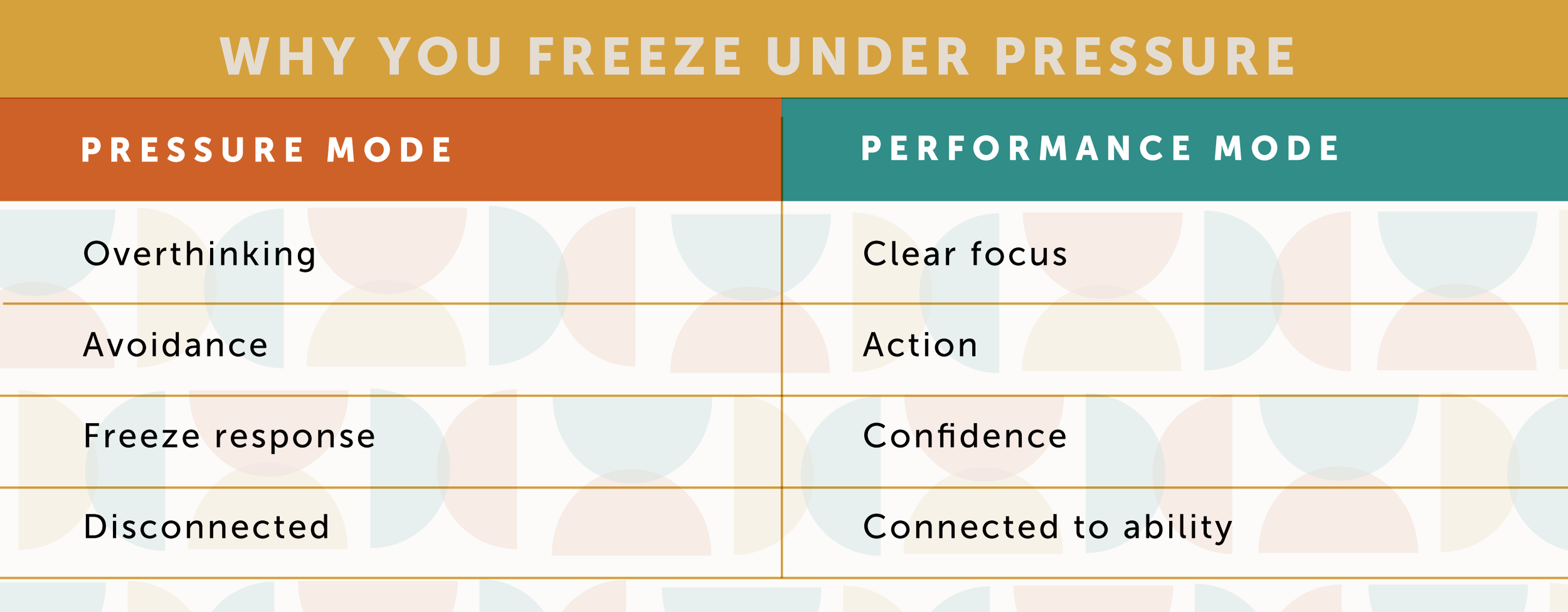
Overthinking every decision (often looping or obsessive)
Avoiding starting or following through
Losing access to your usual clarity or confidence
Physically freezing or shutting down
This isn’t about effort or discipline.
It’s about how your brain and body are responding in high-stakes moments.
How to Stop Freezing Under Pressure (Quick Steps)
Slow the nervous system before trying to perform
Interrupt negative self-talk patterns
Shift out of avoidance cycles
Build regulation, not just discipline
If you’re experiencing this in Eugene, Oregon, our team at NW Therapy Collective offers talk therapy and neurofeedback designed specifically for performance anxiety and nervous system regulation.
A lot of people think freezing under pressure means something is wrong with them.
But often, freezing is a nervous system response to stress, overwhelm, anxiety, or emotional overload, especially for people who care deeply, perform at a high level, or put a lot of pressure on themselves.
In this video, Brandon breaks down why people shut down under pressure and how therapy, neurofeedback, and nervous system support can help you feel more focused, regulated, and resilient under stress.
Performance Anxiety Has Nothing to Do With Your Skill Level
One of the biggest misconceptions we see is that performance issues are tied to competence. They’re not.
Performance challenges have little to do with your capacity — even for people navigating things like ADHD, OCD, or chronic stress. They have everything to do with how your system handles pressure.
One piece that often gets missed is how negative self-talk feeds the cycle. The self-criticism, the doubt, the pressure — it feels like the problem. But it actually comes from the same place that wants you to succeed. It’s not a lack of motivation. It’s motivation caught in a fear loop. That’s why pushing harder often backfires — it feeds the same cycle you’re trying to break.
You can be:
Highly capable
Experienced
Intelligent
… and still struggle with inconsistency under pressure
Because when your nervous system is dysregulated, your brain shifts into protection mode — not performance mode. This is where patterns like avoidance, hyperfocus fatigue, or obsessive thinking can start to take over.
At NW Therapy Collective, we help you reconnect with that drive in a way that supports performance and well-being — instead of keeping you stuck in cycles of self-judgment. Schedule a consultation to start working through it with support.
What’s Actually Happening in Your Brain
When pressure builds, your brain starts prioritizing safety over execution.
That’s when you might notice:
Racing thoughts or mental “blanking”
Difficulty focusing on simple tasks
Second-guessing decisions you’d normally make easily
A strong urge to avoid or escape the situation
This is often referred to as a “freeze response.” And while it feels frustrating, it’s actually your brain trying to protect you. The problem is — it pulls you away from the very abilities you need in that moment.
This is something we work through with clients every day.
How to Stop Freezing and Stay Connected to Your Abilities
At NW Therapy Collective, we take a different approach to performance anxiety.
Instead of focusing only on thoughts or behavior, we focus on the system underneath it all — your nervous system.
Our work is centered around helping you:
Regulate your nervous system under pressure
Build tolerance for high-stakes situations
Stay connected to your skills and abilities
Shift your focus from fear → to action
This often includes a combination of:
The goal isn’t just to “feel better.”
It’s to help you perform the way you know you’re capable of — even when it matters most.
Therapy for Performance Anxiety in Eugene, Oregon
If you’re searching for a therapist in Eugene or Springfield who understands performance anxiety, it’s important to find someone who goes beyond general talk therapy.
At NW Therapy Collective, we specialize in working with:
High-functioning adults
Professionals under pressure
Individuals struggling with focus, consistency, or burnout
This might sound like you if:
You perform well… until the pressure is on
You overthink things you normally do easily
You care deeply about your work or success
You feel inconsistent, even though you know you’re capable
Our approach is designed to help you not just manage anxiety — but improve how you show up in the moments that matter. The more you care about something, the easier it is to overthink or stall, even when you know you’re capable.
If you’re tired of overthinking, stalling, or freezing when it counts, you don’t have to figure this out on your own. We’d be happy to connect and see if our approach is a good fit.
Learn more about neurofeedback and performance therapy or explore additional resources on our site.
Common Questions
-
Freezing under pressure isn’t usually about lack of preparation or ability. It’s often a nervous system response. When something matters deeply to you, your brain can interpret that pressure as a threat, making it harder to access focus, memory, and clear thinking in the moment.
-
Not exactly. Performance anxiety is more situational and tied to moments where you feel evaluated or where the outcome matters to you. You may feel completely capable in most areas of life, but struggle specifically when pressure increases.
-
Yes. Therapy that focuses on nervous system regulation and performance can help you stay connected to your abilities under pressure. Instead of just managing anxiety, the goal is to build consistency, focus, and confidence in real-life situations that matter to you.
-
Neurofeedback is a tool we use to help train your brain to regulate itself more effectively. It can support focus, reduce reactivity, and improve your ability to stay calm and engaged under pressure. It’s often used alongside therapy to support long-term change.
-
Not at all. While we work with athletes and professionals, this approach is helpful for anyone who feels stuck, inconsistent, or overwhelmed when things matter most — whether that’s at work, in relationships, or in daily life.
Still have questions?
We’re happy to talk through what you’re experiencing and see if it’s a good fit. Learn more about us.
Schedule a Consultation with
NW Therapy Collective
If you’re dealing with performance anxiety, overthinking, or feeling stuck under pressure, working with a therapist locally can make a big difference. At NW Therapy Collective, we work with clients across Eugene, Springfield, and the greater Lane County area, supporting high-functioning adults, athletes, and professionals who want to feel more consistent, focused, and confident in their performance. Whether you’re navigating pressure at work, in school, or in your personal life, our approach is designed to help you regulate your nervous system and reconnect with your ability to perform at your best.
