
Why Won’t My Child Listen? Understanding Directions, Defiance, and Power Struggles Through the Nervous System

You ask your child to put on their shoes.
They keep playing.
You ask again. They ignore you, negotiate, or say no. Your frustration rises, and suddenly a simple request has become a full-family power struggle.
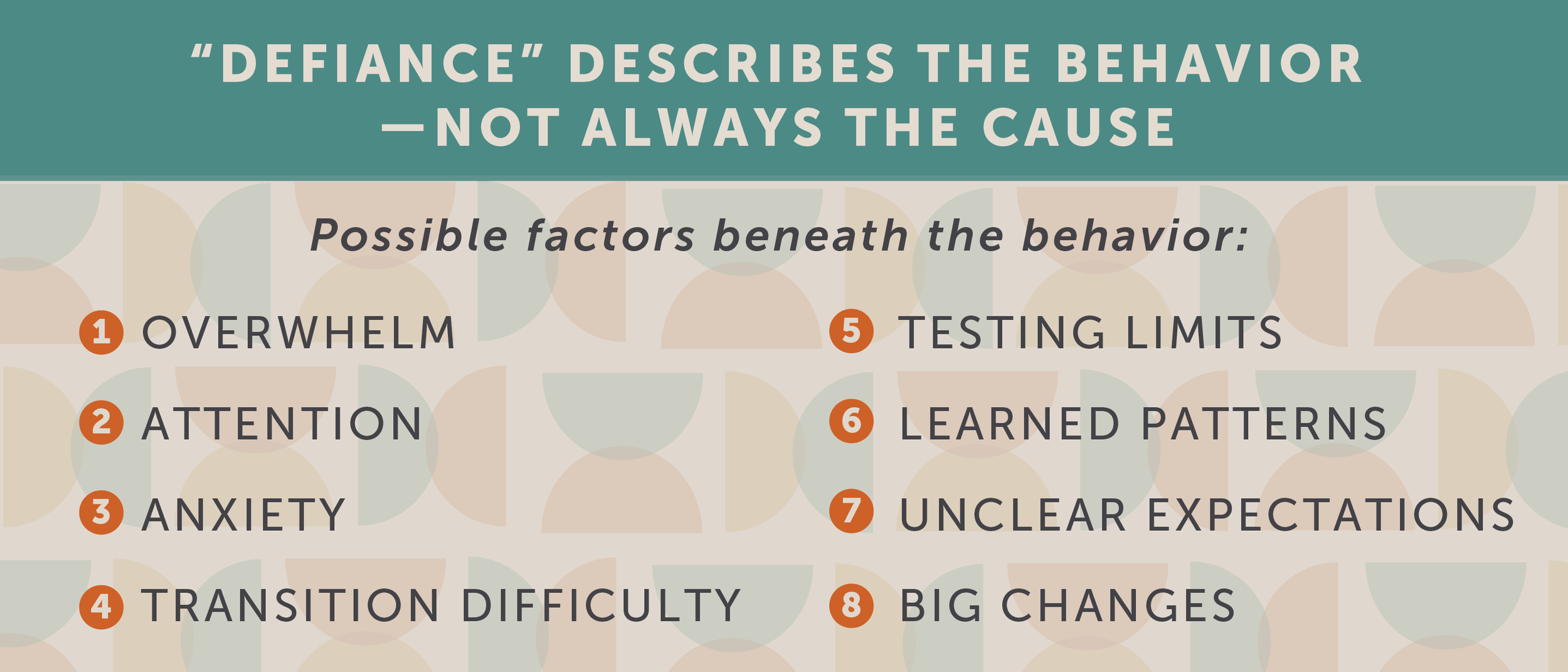
When this happens often, it can feel like your child is being intentionally defiant. But “defiance” describes what a behavior looks like—not necessarily what is causing it.
Difficulty following directions can involve attention, transitions, unclear expectations, emotional overwhelm, or a pattern that has developed over time. Often, it is also an interaction between two nervous systems becoming increasingly activated.
Understanding the pattern does not mean removing expectations. It helps parents respond with more clarity, consistency, and less escalation.
Why Children May Struggle to Follow Directions
Children may not respond right away because:
They are deeply focused and struggling to shift attention.
The direction is too broad or includes too many steps.
They are tired, hungry, overstimulated, or anxious.
They are being asked to stop something enjoyable.
They have learned that the first few requests do not require action.
Arguing or delaying has become part of the family’s normal routine.
Some children also need more support with attention, executive functioning, emotional regulation, or sensory processing.
Understanding the reason does not mean excusing the behavior. It helps parents decide whether the moment needs support, a firmer boundary, clearer communication, or all three.
What Looks Like Defiance May Be Overload
When children feel rushed, overwhelmed, ashamed, or out of control, their nervous system may move into a protective response.
That may look like:
automatically saying no;
arguing or negotiating;
becoming silly or distracted;
avoiding the task;
yelling or crying;
freezing or appearing not to hear;
shutting down completely.
Not every refusal is nervous-system overload. Children also test limits and avoid tasks they do not want to complete.
A more helpful question than “Is my child being defiant?” is:
What is happening in this moment, and what response is most likely to help?
How Power Struggles Develop
A common cycle looks like this:
A parent gives a direction.
The child delays, ignores, or refuses.
The parent repeats the request.
The child learns there may be several warnings.
The parent becomes more frustrated.
The child becomes more resistant or overwhelmed.
The interaction ends through threats, yelling, bargaining, or giving in.
Over time, both people begin expecting conflict before the request is even made.
This is a pattern—not proof that the parent or child is failing. Patterns can change when expectations become clearer and follow-through becomes more predictable.
How to Give Directions Children Can Follow
Get their attention first
Move closer, use their name, and make sure they have shifted attention before giving the direction.
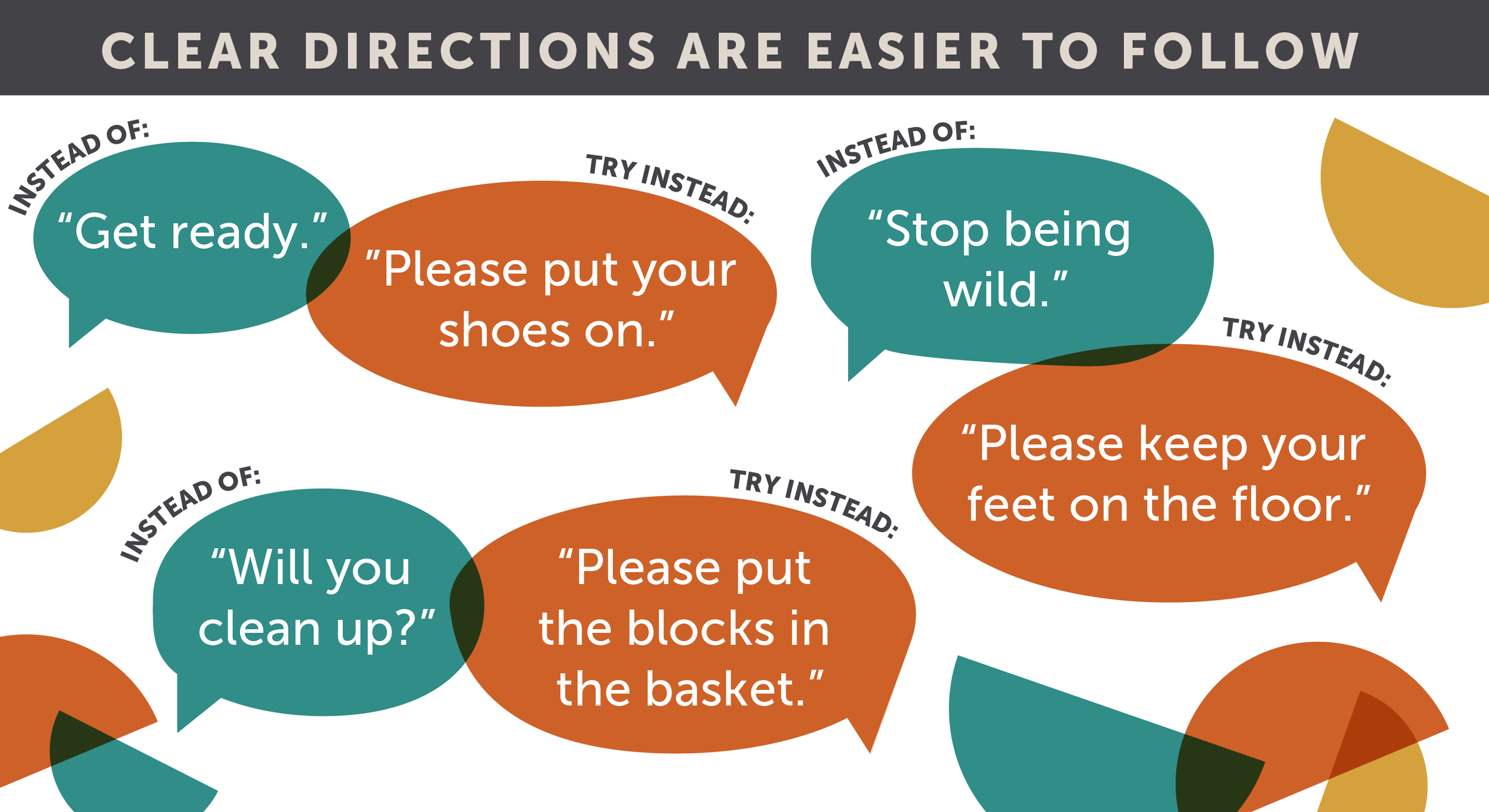
Be clear and specific
Instead of: “Get ready.”
Try: “Please put your shoes on.”
Instead of: “Clean up this mess.”
Try: “Please put the blocks in the basket.”
Say what you want them to do
“Please walk next to me” is often clearer than “Stop running.”
Avoid making required tasks sound optional
If the task is not a choice, avoid asking, “Will you clean up?”
Try: “Please put the toys in the bin.”
Choices can still help when both options are acceptable: “Would you like to put away the blocks or the cars first?”
Allow time to process
Give the direction, pause, and avoid immediately repeating it or adding more instructions.
Notice cooperation
Specific recognition reinforces what worked:
“You turned off the tablet when I asked, even though you were disappointed.”
Follow through predictably
Clear directions are less effective when the expectation changes every time the child becomes upset.
Consistency does not require perfection. It creates a pattern the child can understand.
Regulation Comes Before Escalation
Parents have nervous systems too.
When a parent is tired, rushed, or overwhelmed, they may repeat themselves, talk faster, add more demands, or threaten consequences they do not actually want to use.
A brief pause can help interrupt the cycle.
That may mean lowering your voice, using fewer words, slowing down, or deciding how you will follow through before responding.
Being regulated does not mean being permissive or endlessly patient. It means staying steady enough to choose a response rather than being pulled automatically into the conflict.
A calmer parent cannot guarantee a calm child, but it can prevent additional stress from entering the interaction.
Connection and Structure Work Together
Children benefit from warmth, positive attention, emotional validation, and repair.
They also benefit from clear limits, direct expectations, and predictable follow-through.
Connection without structure can leave expectations unclear. Structure without connection can create more defensiveness.
Parent coaching and PCIT-informed approaches help caregivers strengthen both: building a more connected relationship while making everyday directions and boundaries easier to understand.
When Additional Support May Help
Support may be useful when:
nearly every request becomes a conflict;
routines regularly feel unmanageable;
aggression or destructive behavior is occurring;
a child frequently shuts down or becomes intensely distressed;
the same challenges appear at home and school;
ADHD, anxiety, sensory needs, or developmental differences may be involved;
parents feel stuck despite trying multiple strategies.
Parent coaching can help families look closely at what happens before, during, and after difficult interactions—and practice more effective responses for real-life situations.
The goal is not perfect obedience or perfect parenting.
It is less confusion, less escalation, and more consistency for the entire family.
Frequently Asked Questions
-
They may be deeply focused, overwhelmed, unsure what is expected, or accustomed to receiving several reminders. Getting their attention first and giving one specific direction can help.
-
Defiance describes resistance to a direction or limit. Emotional dysregulation means a child is having difficulty managing their emotional or nervous-system response. The two can look similar, which is why context matters.
-
Repeating directions many times can unintentionally teach children to wait. Give one clear direction, allow reasonable processing time, and follow through consistently.
-
Yes. Parent coaching can help caregivers identify patterns, communicate expectations more clearly, strengthen positive connection, and create more predictable responses to challenging behavior.
-
Parent coaching may be helpful for families navigating power struggles, emotional outbursts, difficulty following directions, bedtime or morning routine stress, sibling conflict, communication challenges, anxiety, ADHD-related challenges, or parenting burnout.
-
Parents do not need to wait until things feel unmanageable. Parent coaching may be helpful when the same conflicts keep repeating, when caregivers feel unsure how to respond, or when family stress is affecting daily routines, connection, or emotional wellbeing.
Parenting Support in Eugene, Oregon
NW Therapy Collective provides parent coaching, family therapy, and nervous-system-informed support for families experiencing power struggles, emotional dysregulation, difficult behavior, and stressful routines.
Support is available in Eugene, with telehealth options for families throughout Oregon.
