
How Parent Coaching Works: Support for Real-Life Family Stress

Parenting can feel overwhelming, no matter how deeply you love and support your child.
You may be trying to stay calm through big emotions, manage behavior challenges, support transitions, respond to defiance, reduce yelling, create better routines, or simply figure out what to do when the strategies that “should” work do not seem to be helping.
Many parents reach a point where they are not looking for judgment or generic advice. They are looking for practical support that makes real life at home feel more manageable.
That is where parent coaching can help.
Parent coaching gives caregivers a space to understand what is happening in the family system, learn practical tools, and practice new ways of responding to stress, behavior, and emotional overwhelm. At NW Therapy Collective in Eugene, parenting support may include therapy, coaching, and PCIT-informed strategies designed to strengthen connection, improve communication, and help parents feel more confident in difficult moments.
What Is Parent Coaching?
Parent coaching is a form of support that helps parents and caregivers better understand their child’s behavior, their own responses, and the patterns that can develop in everyday family life.
Instead of focusing only on what a child is “doing wrong,” parent coaching looks at the full interaction: what happens before a difficult behavior, how the parent responds, what the child learns from that response, and how the pattern continues over time.
A parent coaching session may include talking through real examples from home, identifying stress points, learning new communication strategies, practicing calmer responses, and building a plan parents can actually use during daily routines.
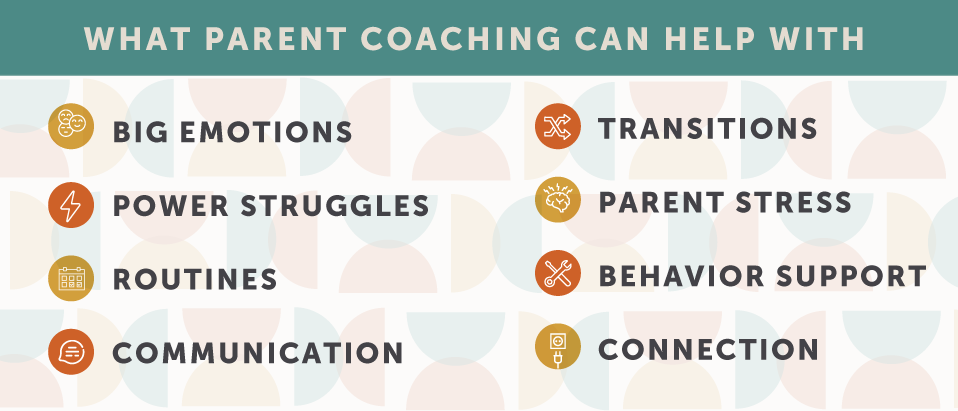
Parent coaching can be especially helpful when families are navigating:
Frequent power struggles
Big emotions or emotional outbursts
Difficulty following directions
Defiance or oppositional behavior
Transitions between activities
Bedtime, morning, or mealtime stress
Parenting burnout
Communication challenges
Sibling conflict
Co-parenting stress
Anxiety, ADHD-related challenges, or nervous system overwhelm
The goal is not perfect parenting. The goal is to help caregivers feel more supported, more intentional, and more equipped to respond in ways that build safety, connection, and consistency.
How Parent Coaching Happens in Real Life
Parent coaching is usually practical, collaborative, and grounded in what is actually happening at home.
A therapist may ask about the moments that feel hardest: the meltdown after school, the bedtime routine that turns into a battle, the child who refuses directions, the parent who feels like they are constantly repeating themselves, or the family pattern where everyone ends up overwhelmed.
From there, the work often focuses on helping parents slow down the pattern and understand what is happening underneath it.
In parent coaching, caregivers may learn how to:
Notice what triggers difficult moments
Respond to behavior without escalating the situation
Give clearer directions
Build routines that reduce stress
Strengthen positive connection with their child
Reinforce helpful behavior
Set limits with more calm and consistency
Repair after conflict
Support emotional regulation, both for the child and the parent
This kind of support can be especially useful because parents do not need more vague advice. They often need help translating good intentions into practical responses they can use when everyone is tired, stressed, late, hungry, overstimulated, or out of patience.
What Is PCIT?
PCIT stands for Parent-Child Interaction Therapy.
PCIT is an evidence-based therapy originally developed for young children with behavioral challenges and their caregivers. While traditional PCIT is often associated with younger children, PCIT-informed parenting support can be useful for families with children across a much wider age range, from toddlers as young as 12 months through adolescence. At NW Therapy Collective, these concepts may be adapted to support parents of children and teens who are navigating frequent tantrums, defiance, aggression, emotional overwhelm, communication challenges, or disruptive behavior. The focus is on improving the parent-child relationship while also helping caregivers build more effective behavior management skills.
One of the unique parts of PCIT is that it is not just a conversation about parenting. It often involves live coaching, where a therapist supports the caregiver in real time while the parent interacts with the child. In traditional PCIT, this may happen through an observation setup or an earpiece, allowing the therapist to coach the parent as they practice new skills.
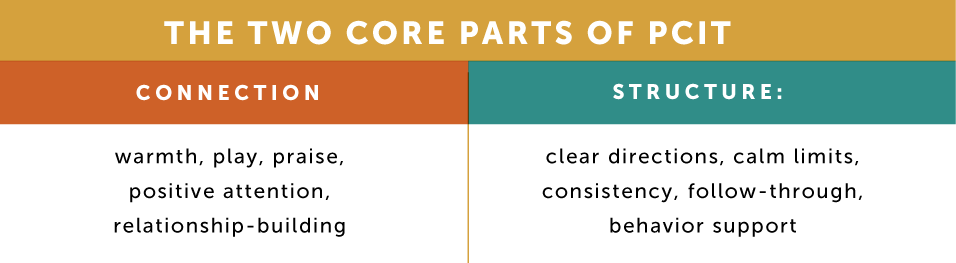
Even when a therapist is not providing formal PCIT, the core concepts behind PCIT can still be helpful for parents to understand. These concepts focus on two major goals: strengthening connection and improving structure.
The Two Core Parts of PCIT
PCIT is often described in two phases: Child-Directed Interaction and Parent-Directed Interaction.
1. Child-Directed Interaction: Strengthening Connection
The first phase focuses on the relationship between the parent and child.
In this stage, parents practice giving positive attention, following the child’s lead during play, noticing helpful behavior, and creating moments where the child feels seen and connected.
The goal is to strengthen the parent-child relationship before focusing heavily on correction or discipline.
This can matter because children often respond better to structure when they also experience warmth, connection, and consistent positive attention. For parents, this phase can also help shift the focus from only noticing difficult behavior to also noticing what is going well.
In everyday language, this might look like:
Spending short, focused time with your child
Noticing and naming positive behavior
Reflecting what your child says
Describing what your child is doing
Offering specific praise
Reducing criticism, commands, and questions during certain types of play
This does not mean parents ignore limits. It means connection becomes part of the foundation for behavior change.
2. Parent-Directed Interaction: Building Structure
The second phase focuses on helping parents give clear directions, set limits, and respond consistently.
This is where caregivers practice more structured behavior management skills. The goal is to help children understand expectations and help parents respond in a calmer, more predictable way.
In real life, this might include learning how to:
Give simple, direct instructions
Avoid long explanations during heated moments
Follow through consistently
Use calm, predictable consequences
Reinforce cooperation
Reduce repeated arguing or negotiation
Stay regulated while setting boundaries
This phase is not about becoming harsh or controlling. It is about helping parents become clearer, calmer, and more consistent so children know what to expect.
Why Parent Coaching Focuses on the Parent-Child Pattern
When a child is struggling, it can be tempting to focus only on the behavior: the tantrum, refusal, yelling, hitting, avoidance, or meltdown.
Parent coaching looks at behavior as part of a pattern.
For example, a child may refuse a direction. A parent may repeat the direction several times. The child escalates. The parent becomes frustrated. Eventually, the parent may give in, yell, threaten a consequence, or shut down. Over time, both the parent and child learn a pattern, even if nobody wants that pattern to continue.
Parent coaching helps caregivers identify these cycles and practice new responses.
This can support the whole family system because when the parent has more tools, the child often has more opportunity to respond differently. The work is not about blaming parents. It is about giving parents more support inside the moments that are already happening.
Parent Regulation Matters Too
One of the most important parts of parenting support is recognizing that parents have nervous systems too.
When a child is overwhelmed, defiant, anxious, loud, or emotionally dysregulated, a parent’s body may also move into stress. You may feel your heart rate increase, your voice get louder, your patience disappear, or your thoughts turn into “I can’t do this again.”
That reaction is human.
Parent coaching can help caregivers notice their own stress response and build tools for staying more regulated during difficult moments. This might include slowing down, changing tone of voice, pausing before responding, using fewer words, or learning how to repair after a hard interaction.
A calmer parent does not mean a perfect parent. It means the parent is building more capacity to lead the moment instead of being pulled into the escalation.
What Can Parents Expect From Parenting Support?
Parent coaching is not about being handed a script and expected to follow it perfectly.
It is a process of learning, practicing, reflecting, and adjusting.
Parents can expect to talk through real situations, learn practical strategies, and explore what may be contributing to stress at home. Sessions may include skill-building, communication tools, education about child development and nervous system regulation, and support for the parent’s own emotional experience.
Depending on the family’s needs, parenting support may focus on:
Reducing daily conflict
Supporting emotional regulation
Improving parent-child connection
Creating more predictable routines
Responding to behavior with less reactivity
Strengthening communication
Supporting children through transitions
Helping parents feel less alone and more equipped
The work is collaborative. A therapist can help parents identify what is realistic, what needs to change, and what tools might fit their child, family, and current season of life.
When Should a Parent Reach Out for Support?
You do not need to wait until things feel unmanageable to reach out for parenting support.
Parent coaching may be helpful if you feel stuck in the same arguments, overwhelmed by your child’s behavior, unsure how to respond to big emotions, or exhausted by the amount of stress happening at home.
It may also be helpful if you are navigating a major transition, such as a new school year, divorce or separation, grief, trauma, a new diagnosis, sibling changes, or a season where your child seems more dysregulated than usual.
Many parents reach out because they want to respond differently but do not know how to get there on their own.
That is a valid reason to ask for support.
Frequently Asked Questions About Parent Coaching and PCIT
-
Parent coaching is support for parents and caregivers who want practical tools for real-life family stress. Sessions may focus on behavior challenges, emotional regulation, communication, routines, parent-child connection, and helping caregivers respond with more calm and consistency.
-
Parent coaching and family therapy can overlap, but they are not always the same. Parent coaching often focuses more directly on helping caregivers understand patterns, build skills, and practice new responses at home. Family therapy may involve more members of the family system and explore broader relationship dynamics.
-
PCIT stands for Parent-Child Interaction Therapy. It is an evidence-based approach that focuses on strengthening the parent-child relationship while helping caregivers build clearer, more consistent behavior support skills. Core PCIT concepts often include positive attention, specific praise, clear directions, calm limits, and consistent follow-through.
-
It depends on the family’s needs and the type of support being provided. Some parent coaching sessions may involve only the parent or caregiver, while others may include the child or family members. The goal is to create a plan that fits the family and helps parents apply tools in everyday life.
-
Parent coaching may be helpful for families navigating power struggles, emotional outbursts, difficulty following directions, bedtime or morning routine stress, sibling conflict, communication challenges, anxiety, ADHD-related challenges, or parenting burnout.
-
Parents do not need to wait until things feel unmanageable. Parent coaching may be helpful when the same conflicts keep repeating, when caregivers feel unsure how to respond, or when family stress is affecting daily routines, connection, or emotional wellbeing.
Parenting Support in Eugene, Oregon
NW Therapy Collective offers parent coaching, family support, therapy, and nervous system-informed care in Eugene, Oregon.
Brandon Marshall, MS, LPC, MFT, supports individuals, couples, families, and youth through a collaborative and empowering approach grounded in strong therapeutic relationships. For parents, that support may include practical coaching, nervous system-informed tools, and core concepts from evidence-based approaches like Parent-Child Interaction Therapy.
If your family is navigating stress, behavior challenges, emotional overwhelm, or communication struggles, parent coaching can help you better understand the pattern and build tools for moving through it.
Ready to Learn More?
Parenting is hard. Getting support does not mean you are failing. It means you are looking for new tools, more clarity, and a different way forward.
NW Therapy Collective offers in-person therapy in downtown Eugene and telehealth across Oregon.
Learn more or reach out at NWTherapyCollective.com.
