How Neurofeedback Works: What to Expect in Your First Few Sessions
If you're wondering how neurofeedback works or what to expect during your first neurofeedback session you've probably come across plenty of information about brainwaves, training protocols, and potential benefits. But one of the most common questions we hear at NW Therapy Collective is much simpler:
What actually happens during a neurofeedback session?
Whether you're a professional looking to perform more consistently under stress, a student struggling with focus, a parent exploring options for your child, or someone interested in improving emotional regulation, understanding the process can help you decide whether neurofeedback may be a good fit. One helpful thing to know upfront: neurofeedback is usually approached as a training process, not a one-time intervention. For many clients, a series of around 20 sessions gives the brain time to learn, respond, and build more consistent patterns over time.
Before Your First Session
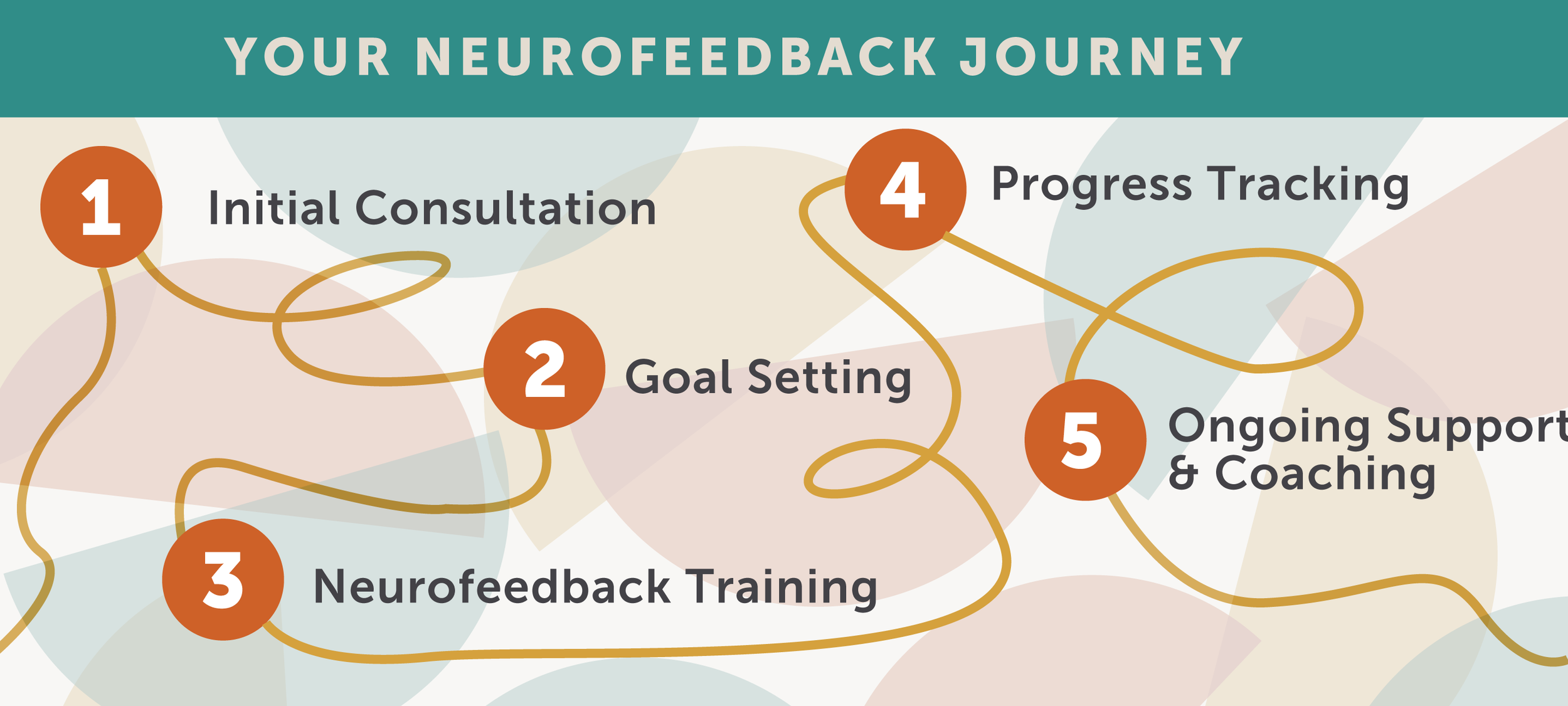
Every neurofeedback journey starts with a conversation.
Before jumping into training, we'll spend time discussing your goals, current challenges, and what you're hoping to improve. Some clients come to us looking for support with focus and attention. Others are navigating stress, anxiety, performance pressure, or emotional regulation challenges.
Our goal is to understand the bigger picture and determine how neurofeedback may fit alongside therapy, coaching, or other supports already in place.
What Happens During a Neurofeedback Session?
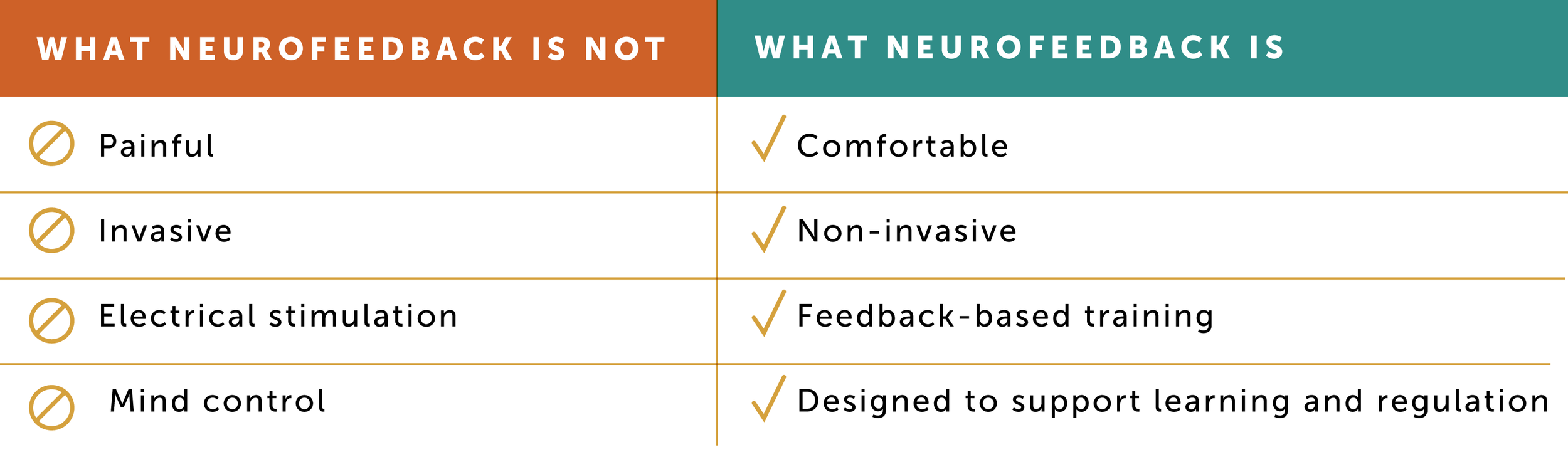
Neurofeedback is a non-invasive form of brain training that provides real-time feedback about brain activity.
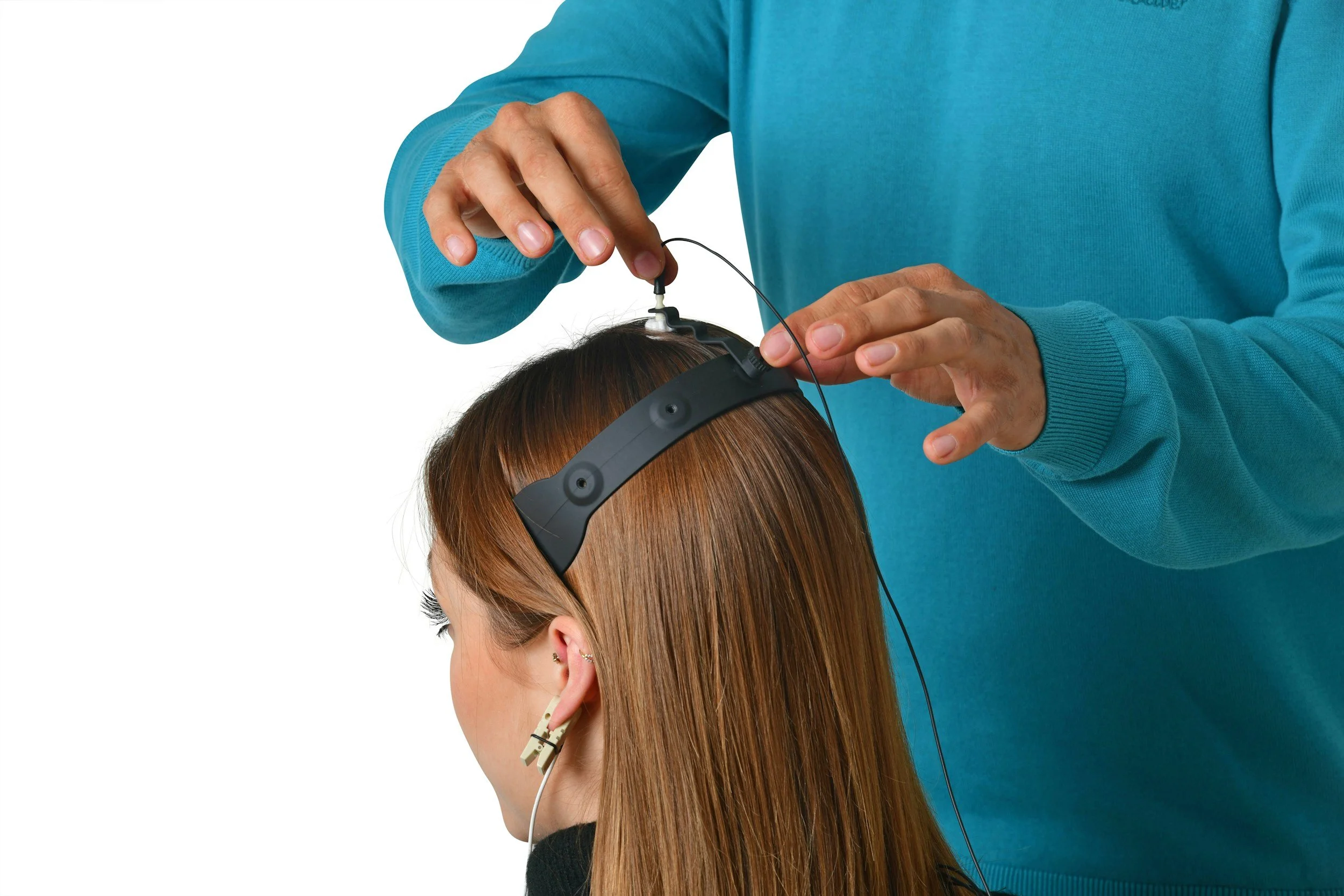
During a session, sensors are placed on the scalp to monitor electrical activity in the brain. These sensors only collect information—they do not send electricity into the brain.
You'll typically sit comfortably while watching a screen that provides feedback through visuals, videos, or other interactive elements. As your brain produces certain patterns of activity, the feedback responds in real time.
Over repeated sessions, the brain can begin recognizing and reinforcing more efficient patterns, much like practicing any other skill.
What Does Neurofeedback Feel Like?
Many people are surprised by how simple the experience feels.
There are no shocks, no stimulation, and no active effort required to "make it work." Most clients simply sit back and engage with the feedback process while the brain does the learning.
Some people describe sessions as relaxing. Others don't notice much during the session itself but begin recognizing changes in focus, stress tolerance, or awareness over time.
What Should You Expect During the First Few Sessions?
One of the biggest misconceptions about neurofeedback is that results should happen immediately.
In reality, the first few sessions are often about building awareness, establishing patterns, and helping the brain become familiar with the training process.
Some clients notice subtle shifts early on, such as improved focus, better sleep, or increased awareness of stress. Others experience more gradual changes as training continues. While every brain and goal is different, many clients should plan for around 20 sessions as a meaningful benchmark for evaluating clinically significant progress.
Like physical fitness, neurofeedback is generally most effective when approached as a process rather than a quick fix.
Early Sessions Focus On
• Building consistency
• Establishing patterns
• Tracking progress
• Supporting long-term change
Why We Often Pair Neurofeedback with Therapy
At NW Therapy Collective, neurofeedback is often integrated alongside therapy and coaching rather than treated as a standalone solution.
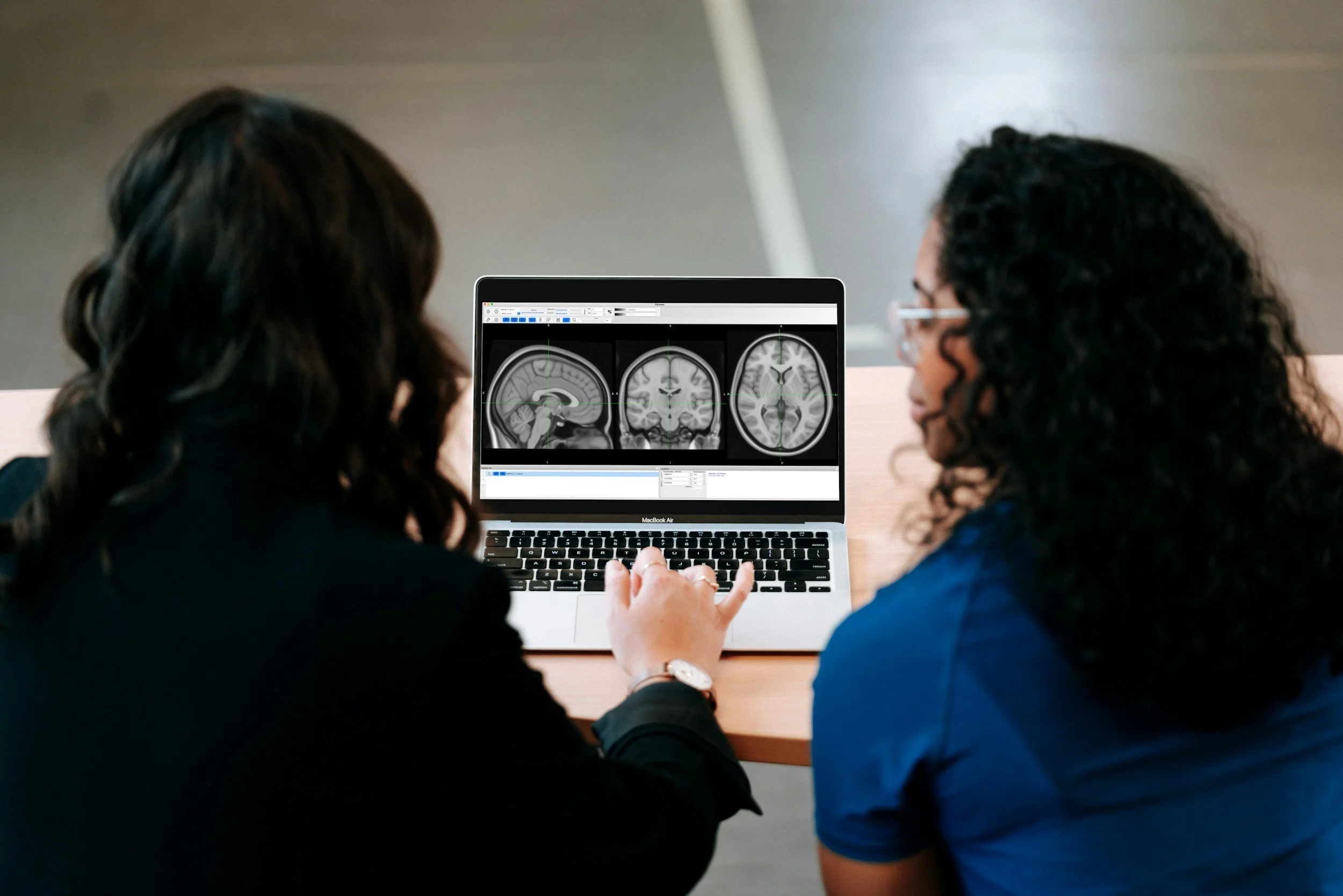
Neurofeedback may help support awareness, regulation, and nervous system flexibility. Therapy provides a space to understand how those patterns show up in daily life, relationships, work, parenting, and performance.
Together, these approaches can create opportunities for both skill development and deeper personal growth.
Want to learn more? Read our guide: What Is Neurofeedback? How This Evidence-Based Method Is Changing Lives
What Can Neurofeedback Support?
While every person's goals are different, neurofeedback is often used to support:
Focus and attention
Stress resilience
Emotional regulation
Recovery from chronic stress
It's important to remember that neurofeedback is not a cure-all. Rather, it is one tool that may support broader goals related to mental performance, well-being, and long-term growth.
Frequently Asked Questions About Neurofeedback
-
No. Neurofeedback is non-invasive and does not send electricity into the brain. Sensors simply monitor brain activity and provide feedback through a computer system.
-
Many clients begin with a plan of around 20 sessions. Some people may notice changes sooner, while others may benefit from more than 20 sessions depending on their goals, history, and how their nervous system responds to training.
At NW Therapy Collective, progress is tracked over time so sessions can be adjusted based on what each client is noticing and working toward.
-
Yes. At NW Therapy Collective, neurofeedback is often paired with therapy and coaching to help clients apply what they are learning to everyday life.
-
Every client is different. Neurofeedback is generally approached as a process that develops through consistency and repetition rather than a single session.
Is Neurofeedback Right for You?
If you're curious about neurofeedback, the best place to start is a conversation.
Whether you're looking to improve focus, navigate stress more effectively, build resilience, or perform more consistently in work, school, athletics, or everyday life, neurofeedback may be worth exploring.
If you're looking for neurofeedback in Eugene, Oregon, at NW Therapy Collective, Brandon Marshall often integrates neurofeedback alongside therapy and coaching to support focus, emotional regulation, stress resilience, and performance under pressure. Learn more about our services and practice here.
Our approach is designed to help clients better understand how their brain and nervous system respond to stress while building skills that support long-term growth and well-being.
Interested in learning more? Contact NW Therapy Collective to schedule a consultation and explore whether neurofeedback may be a good fit for your goals.
